
31°C, New York


Notification products, updates
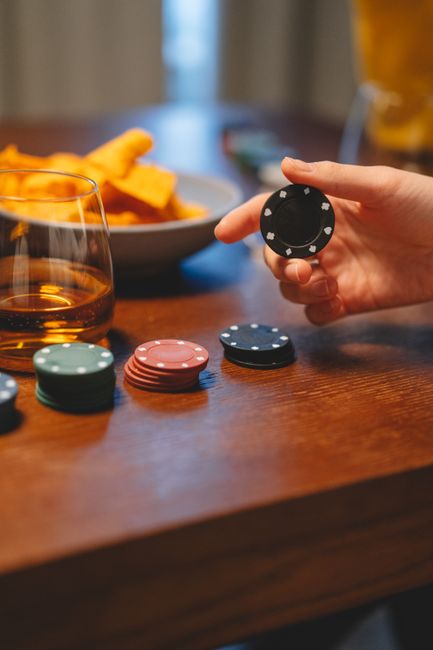
Ask ten gamblers where the smart money goes and you'll get ten different answers, usually delivered with more confidence than the topic deserves. The truth is that slots and poker are not competing versions of the same activity. They're different financial instruments wearing similar casino uniforms. One is a lottery ticket with entertainment attached. The other is a skill game where a decent player can grind out a living. Confusing the two is the fastest way to donate your bankroll to people who understand the difference perfectly.
Let's break down what actually separates these games, because the math matters more than the marketing.
Every casino game carries a built-in advantage for the operator. The size of that advantage determines how long your money survives, and how much you need to win to break even. In poker, you're not playing against the house at all — you're playing against other players, and the house takes a rake. A typical live cash game rakes somewhere between 5% and 10% of each pot, capped at a few dollars. Online, it's often 5% or less. That rake is beatable. Players who study, manage tilt, and game-select properly consistently show profits over thousands of hands.
Slots are a different beast entirely. The house edge on a modern video slot usually falls between 2% and 10%, depending on the game and the jurisdiction. Some low-volatility classics sit around 3-4%. Flashy branded machines with massive jackpots can push past 8%. Over time, that edge grinds you down with mathematical certainty. There's no decision you can make during a spin that changes the expected value. The RNG doesn't care how you feel.
Here's where slots and poker diverge in a way that catches people off guard. In poker, variance is real but manageable. A winning player can lose for weeks. A losing player can win a tournament and feel invincible. But over a large sample — say 100,000 hands — the skill edge shows up. The noise fades and the signal emerges.
Slots don't work that way. Since every spin is independent and the odds are fixed, your expected result over a million spins is simply your total wagered amount multiplied by the RTP. A 96% RTP slot means you lose 4% of everything you cycle through. That's not a prediction; it's a certainty. The only variable is how long it takes and whether a jackpot happens to hit you on the way down. See สล็อตเว็บตรง for a side-by-side comparison.
This doesn't make slots stupid. It makes them entertainment with a known cost, like a movie ticket that occasionally pays out five figures. The problem starts when people treat a hot machine as a skill game and chase losses as if strategy will save them.
Poker bankroll management is a genuine skill. Serious cash game players keep 20 to 40 buy-ins for their stake level. Tournament players need 50 to 100 buy-ins because the variance is brutal. If you're playing $1/$2 no-limit, that means a bankroll of $4,000 to $8,000 just to absorb normal swings without going broke. Get this wrong and you'll be forced to play scared money, which is the quickest route to losing.
Slot bankroll management is simpler but often ignored. The rule is straightforward: decide what you're willing to lose before you sit down, and treat it as a sunk cost. If you load $200 into a session, that $200 is gone the moment you start spinning. Anything you cash out is a bonus. Bet sizing matters too — if you're playing a slot with a $1 minimum and a $100 bankroll, you have 100 spins. That's roughly 15 to 30 minutes of play depending on speed. Want a longer session? Bet smaller or bring more.
Modern slots deserve some credit. The mechanics have evolved well beyond three reels and a lever. Megaways games offer up to 117,649 ways to win on a single spin. Cluster pays slots remove paylines entirely. Bonus buy features let you skip straight to the free spins round for a fixed price — typically 50x to 100x your bet. Hold-and-win mechanics, expanding wilds, and multiplier trails have turned what was once a passive experience into something visually inventive.
The catch is that most of these features don't change the underlying math. A bonus buy at 80x your bet is priced to reflect the average return of that feature, minus the house edge. You're not outsmarting the game. You're just fast-forwarding to a predetermined outcome. That doesn't mean it's not fun. It means you should know what you're paying for.
The reason poker remains one of the only beatable casino games is that your opponents make mistakes, and you can exploit them. Position matters — acting last in a hand gives you more information and more control. Aggression works because most players fold too often to pressure. Reading betting patterns, identifying tight vs. loose opponents, and adjusting your range accordingly are learnable skills. None of that exists in slots.
If you want to improve at poker, the path is specific: study preflop charts, review your hand histories, focus on one leak at a time, and play fewer tables so you can actually think. The players who make money online are treating it like a part-time job, not a lottery ticket.
Slots are pure entertainment with a fixed, known cost. Poker is a competitive endeavor with a real but narrow edge available to those who put in the work. Neither is morally superior, and neither is a guaranteed path to profit. The mistake is switching between them without adjusting your expectations. Sit down at a slot expecting to beat it, and you'll drain your account. Sit down at a poker table expecting a slot machine's simplicity, and the regulars will take your stack. Know which game you're playing, and the whole experience gets a lot less expensive.

The Quiet Rowan shares practical, down-to-earth guidance on seasonal cottage gardening, british wildlife and slow nature living for readers across the UK.
Stay Tuned With Updates


Leave A Comment